
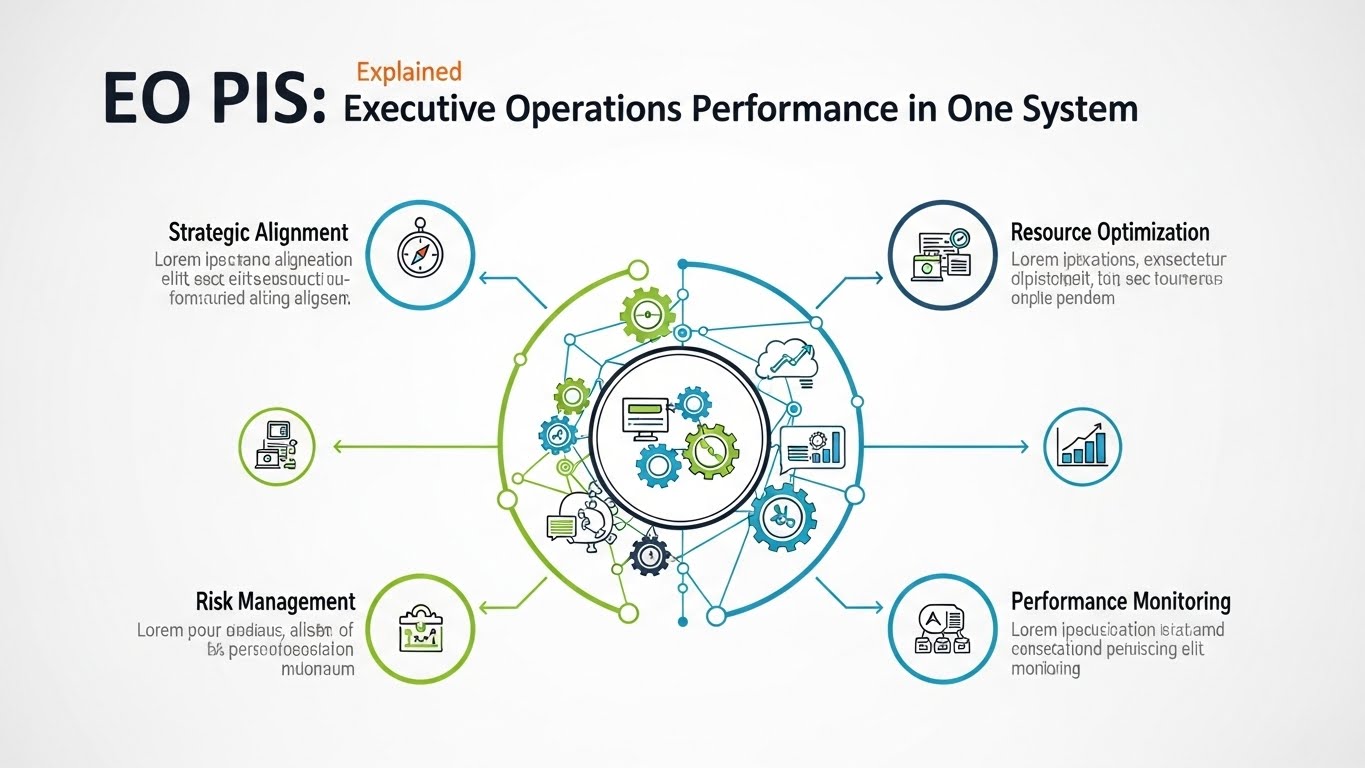
Executive Operations Performance in One System is a modern approach to how leadership teams monitor, evaluate, and optimize organizational performance in real time. In an era where decisions must be fast, data-driven, and aligned with strategic goals, Executive Operations Performance Information Systems act as a centralized intelligence layer for executives. Instead of relying on fragmented reports, delayed metrics, or intuition alone, this approach brings all critical operational insights into one unified system.
This article provides a comprehensive, in-depth explanation of how it works, why it matters, and how organizations can use it to gain a sustainable competitive advantage.
What Is EO Pis?
EO Pis stands for Executive Operations Performance Information Systems. It is a strategic measurement and monitoring framework designed specifically for executive leadership. Unlike traditional reporting tools that focus on individual departments, this framework integrates data across the entire organization to present a real-time, high-level view of performance.
At its core, the system transforms raw operational data into actionable executive insights. It answers critical leadership questions such as:
-
Is the organization performing according to strategic objectives?
-
Where are risks emerging right now?
-
Which areas need immediate executive attention?
-
How efficiently are resources being utilized?
This framework is not just software—it is a decision-support structure built around executive priorities.
Why This System Is Critical for Modern Executives
The Challenge of Fragmented Data
Many organizations struggle with siloed data. Finance, operations, HR, marketing, and IT often operate on separate systems, each producing its own reports. Executives must manually interpret this information, which increases the risk of misalignment and delayed decisions.
A unified executive performance system solves this issue by consolidating performance indicators into one executive-facing view.
Real-Time Decision-Making
In fast-moving markets, delayed insights can result in missed opportunities or costly mistakes. Real-time visibility into organizational health allows leaders to act immediately rather than react too late.
Strategic Alignment Across the Organization
This approach ensures that daily operations remain aligned with long-term strategy. Every metric within the system is mapped to executive goals, making it easier to track progress and adjust direction when necessary.
Core Components of an Executive Performance System
Executive Dashboards
Dashboards are the visual foundation of the platform. They present key performance indicators in a clear, concise, and intuitive format. Rather than overwhelming leaders with data, dashboards emphasize what matters most.
Typical features include:
-
Performance summaries
-
Trend analysis
-
Anomaly alerts
-
Strategic goal tracking
Executive-Level KPIs
The framework focuses on leadership KPIs rather than operational noise. These indicators are selected to reflect overall organizational health and strategic success.
Common examples include:
-
Revenue growth rate
-
Operating margin
-
Customer satisfaction index
-
Employee engagement score
-
Operational efficiency ratios
Data Integration Layer
The system integrates data from ERP platforms, CRM tools, HR software, and operational databases. This integration ensures consistency, accuracy, and a single source of truth.
Real-Time Alerts and Signals
Instead of waiting for periodic reports, executives receive proactive notifications when performance deviates from expectations, enabling early intervention.
How Executive Operations Performance Works in One System
Step 1: Strategic Goal Definition
The framework begins with clearly defined executive objectives, such as growth targets, efficiency improvements, risk reduction, or innovation outcomes.
Step 2: Metric Mapping
Each objective is linked to measurable performance indicators, ensuring every metric has a clear strategic purpose.
Step 3: Data Collection and Normalization
Data is continuously gathered from across the organization and standardized for consistent comparison and analysis.
Step 4: Visualization and Insight Generation
The platform converts data into executive-ready insights using dashboards, summaries, and visual analytics that simplify complex information.
Step 5: Action and Feedback Loop
Leaders act on insights, and the results of those actions are fed back into the system, creating a continuous improvement cycle.
Key Benefits for Executive Leadership
Improved Strategic Visibility
Executives gain a holistic view of organizational performance without relying on multiple disconnected reports.
Faster and Better Decisions
Real-time insights enable confident, timely decision-making backed by reliable data.
Enhanced Accountability
Transparent performance indicators aligned with strategy improve accountability across teams and departments.
Risk Identification and Mitigation
Early warning signals allow leaders to address potential risks before they escalate.
Stronger Organizational Alignment
Using one executive performance system reinforces priorities and expectations throughout the organization.
Executive Performance Systems vs Traditional Reporting
Limitations of Traditional Reporting
-
Static and historical data
-
Department-specific perspectives
-
Manual interpretation
-
Limited strategic context
Advantages of a Unified Executive System
-
Real-time performance insights
-
Organization-wide visibility
-
Automated analytics
-
Executive-focused intelligence
This shift moves performance management from reactive reporting to proactive leadership insight.
Industry Use Cases
Corporate Enterprises
Large organizations use executive performance systems to align business units, manage complexity, and track profitability at scale.
Healthcare Organizations
Healthcare leaders monitor patient outcomes, compliance, operational efficiency, and financial performance in one integrated view.
Manufacturing and Supply Chain
Manufacturers track production efficiency, inventory health, supplier performance, and cost control in real time.
Financial Services
Financial institutions rely on executive-level insights to manage risk exposure, regulatory requirements, customer performance, and profitability.
Best Practices for Implementation
-
Secure executive sponsorship
-
Keep metrics focused and relevant
-
Maintain strong data governance
-
Design dashboards for clarity
-
Regularly refine metrics as strategy evolves
Role in Digital Transformation
Executive performance systems connect digital investments with leadership oversight. While organizations adopt new technologies, this framework ensures executives can clearly measure impact and outcomes.
By integrating analytics and automation, digital transformation becomes measurable and actionable.
Common Adoption Challenges
-
Resistance to change
-
Persistent data silos
-
Overly complex system design
Addressing these challenges requires strong leadership, clear communication, and simplicity.
The Future of Executive Operations Performance
Future systems will increasingly use artificial intelligence, predictive analytics, and scenario modeling. These advancements will enable leaders to anticipate outcomes rather than simply observe results.
Emerging trends include:
-
AI-driven insights
-
Predictive risk alerts
-
Strategic scenario planning
-
Personalized executive dashboards
Conclusion
Executive Operations Performance in One System represents a fundamental shift in how executives lead organizations. By consolidating performance intelligence into a single real-time framework, leaders gain clarity, speed, and alignment.
In a business environment where insight and agility define success, EO Pis is not just a performance tool it is a strategic leadership advantage that supports long-term growth and resilience.